RSS Feed
Tampilkan postingan dengan label Nature. Tampilkan semua postingan

Manufacturing Nature

Posted by Flora Sawita Labels: , , , , , , ,


For years scientists and engineers have been studying "natures materials" and trying to replicate them. An example of this is the silk web created by a spider. When comparing gram to gram, a spiders web is 5 times stronger than steel! Can you imagine a building made up from a spider web? Other than you sticking to the floor and waiting a LONG time for the elevator, that would be amazing. The only problem so far with replicating natures building tools is that scientists haven't found a way to do it.
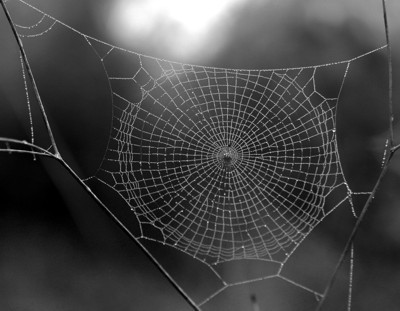

While some processes have tried to replicate nature, such as the industrial ceramics man has created to copy the inside coating on an abalone shell, nothing has come close or used an environmental friendly way of producing it. However, these road blocks aren't stopping engineers and biologists from continually looking into ways they can replicate nature in order to have a positive effect on the environment.

One of these ways is to build roofs in a style that replicates a forest canopy which would protect against soil erosion by, according to an article on www.newsweek.com, "dissipating the energy of monsoon rains and by creating wind currents that essentially push the rain back up into the atmosphere."

While this is only being experimented with for the time being, the possibilities are very real that we could see the evolution in manufacturing from large plants who create CO2 gasses and other harmful emissions, to a more sustainable and environmentally friendly manufacturing processes.

I think that by studying the way birds build nests using natural materials is fascinating. I think by studying the woven patterns and the way birds put together a strong nest is something we can learn from in terms of creating structurally sound buildings with less harmful materials.

What kinds of products would you like to see come out that replicate nature? What animals do you think are the best candidates to study in order to replicate? (not animal testing, just observational study of course.)

Source:

Red Rock Disappearing Act

Posted by Flora Sawita Labels: , , , , , , , , ,

In honor of my impending trip to Las Vegas this afternoon, I felt I would touch on the erosion of the Red Rock Canyon.

The picture above shows how the cliffsides of the mountain are eroding away due to weather. While this does look beautiful and is very fun to hike around, this is a major problem due to eventual land loss. Future generations will only have pictures of what this majestic landscape once looked like. Not only weather, but run-off also plays a significant part of the land washing away due to the chemicals in the run-off which speed up the erosion process.

While I hope to hit the big jackpot while in Vegas, at least I can rest easy knowing that if I run out of money trying to hit said jackpot...I will always be able to head outside and enjoy what nature gave us while it's still here.

We would love to see some of your favorite places to visit that may be eroding. In the comment section, please share pictures and a few coments about your favorite places!

Biosphere 2

Posted by Flora Sawita Labels: , , , , , ,


Lack of knowledge about the intricacies of soil ecosystems was highlighted by the failure of Biosphere 2. This manmade “ecosystem,” built in Arizona, was to house eight human beings along with 4,000 species of plants and animals for two years. The technological wonder began to experience problems soon after the experiment began in 1991. By 1993, oxygen concentrations had fallen precipitously within the enclosed atmosphere. Morning glory vines, introduced to absorb excess carbon dioxide, overran other plants. Nineteen of 25 vertebrate species died off, as did all pollinators, dooming many plants to seedlessness. The majority of insects were lost, leaving ants, cockroaches, and katydids as the dominant species. Scientists still don’t understand the causes of ecosystem failure, but one guess is the imbalance of introduced soil. A high level of organic matter caused microbial populations to take off and consume the available atmospheric oxygen.
Please be aware about the delicacy of our ecosystem. Visit this web page about 20 different ways in which you can help preserve our ecosystem. Try and complete at least one a day.

Source

Eating Fish Healthy or Deadly?

Posted by Flora Sawita Labels: , , , , , , ,

by L Fashing
We have heard that eating fish several times a week is healthy for us, but could it also be deadly?

Fish may contain dangerously high levels of mercury that is "not healthy" for us. Tuna is the major source of mercury in our American diet and Bluefin Tuna is usually the fish of choice. Sushi tuna and tuna steaks contain higher levels of mercury than others. The FDA’s recommendation of mercury concentration is 0.38 ppm; however, some sushi tuna has been tested with an average value of 0.86 ppm.

Deadly? It is for Bluefin Tuna. With overfishing Bluefin Tuna could disappear forever.

Check out the Mercury you may be consuming!
Click on this link. http://www.gotmercury.org/

Help Save a Bluefin -- choose alternative substitutes.

Ecotone: A Literary Journal

Posted by Flora Sawita Labels: , , , , , , , , , , , , , , ,

Readers and writers alike may be interested in Ecotone, a literary journal concerned with nature, environment, and ecosystems. According to their website,

Ecotone is a literary journal of place that seeks to publish creative work about the environment and the natural world while avoiding the hushed tones and clichés of much of so-called nature writing. In the natural world an ecotone is a landscape where two separate ecosytems overlap, a place of danger and opportunity for animals. As we try to reimagine a new literature of place, our journal embraces literary ecotones, writing that breaks across genres and seeks out edges. These edges—between science and literature, the urban and rural, the personal and biological—are places that are alive and electric, as well as new and dangerous.
Visit Ecotone here.

-AL

A little effort really can make a big impact- on your wallet!

Posted by Flora Sawita Labels: , , , ,

One of my favorite publications is Real Simple magazine. Looking
through some old issues, I found some of their practical advice really
relates to our project, and can help us go green- environmentally and
financially!

In the March 2002 issue of Real Simple magazine, their tips section
suggests that we unplug large appliances, like televisions, when going
on vacation (find the blurb at: http://www.realsimple.com/realsimple/content/0,21770,689574,00.html).
This may sound silly, but even turned off, these appliances can still
consume up to 40 watts an hour when they're plugged in! If you went
away for a weekend vacation- leaving after work on Friday (5 pm), and
returning on Sunday night (8 pm), you could be using- and paying for-
204 watts of electricity for your television to just sit there. Now
imagine if you had 5 large appliances that you left plugged in and
turned off- you'd be paying for just over 1,000 watts of electricity,
not to mention the service charges that go with it. In other words,
unplug your appliances and save some dough for the souvenir stands!

Speaking of electric bills- and all the other pesky parcels that seem
to have a habit of popping up in our mail boxes, my trusty magazine
has another money saving tip, which can also help save paper! The
March 2006 issue says that the average household receives 15 bills per
month (Ouch!). However- there is a silver lining to this nasty little
cloud! If you use the internet or phone (or automatic billing) where
it's available, you could save some money to actually pay those bills!
With stamps now costing 41 cents in the USA, based on the average
household, you could save yourself $6.15 per month, which translates
to $73.80 per year!
If you live in the UK, and use Second Class postage on your 15 bills
(24p/letter), you could save £3.6, or £43.2 per year! Our Aussie mates
pay $.50 per letter, and 15 bills a month paid using a free
alternative would save you $7.50 per month, a whole $90 per year! My
exchange students from the Far East pay bills, too. Japanese postal
customers pay 60 yen per first class stamp. Our friends in the land of
the rising sun could save 900 yen per month, and that's 10,800 yen per
year! The article can be found at: (http://www.realsimple.com/realsimple/gallery/0,21863,1152145,00.html)

Visit our website:

http://sites.google.com/site/ecomerge2008/

Label

2011 News AGRIBISNIS APINDO Africa Agriculture Business Agriculture Land Argentina Australia Bangladesh Berita Berita Detikcom Berita Info Jambi Berita Kompas Berita Padang Ekspres Berita Riau Pos Berita Riau Today Berita Tempo Berita riau terkini Biodiesel Bursa Malaysia CPO Tender Summary Cattle and Livestock China Cocoa Company Profile Corn Cotton Crude Palm Oil (CPO) and Palm Kernel Oil (PKO) Dairy Dairy Products Edible Oil Euorope European Union (EU) FDA and USDA Fertilizer Flood Food Inflation Food Security Fruit Futures Futures Cocoa and Coffee Futures Edible Oil Futures Soybeans Futures Wheat Grain HUKUM India Indonesia Info Sawit Investasi Invitation Jarak pagar Kakao Kapas Karet Kebun Sawit BUMN Kebun Sawit Swasta Kelapa sawit Kopi Law Lowongan Kerja MPOB Malaysia Meat News Nilam Oil Palm Oil Palm - Elaeis guineensis PENGUPAHAN PERDA Pakistan Palm Oil News Panduan Pabrik Kelapa Sawit Penawaran menarik Pesticide and Herbicide Poultry REGULASI RSPO Rice SAWIT Serba-serbi South America Tebu Technical Comment (CBOT Soyoil) Technical Comment (DJI) Technical Comment (FCPO) Technical Comment (FKLI) Technical Comment (KLSE) Technical Comment (NYMEX Crude) Technical Comment (SSE) Technical Comment (USD/MYR) Teknik Kimia Thailand Trader's Event Trader's highlight USA Ukraine Usaha benih Vietnam Wheat benih bermutu benih kakao benih kelapa benih palsu benih sawit benih sawit unggul bibit sawit unggul biofuel biogas budidaya sawit corporation palm oil pembelian benih sawit perburuhan pertanian soybean umum varietas unggul