RSS Feed
Tampilkan postingan dengan label biomass. Tampilkan semua postingan

Biomass, Biofuels and Biogas

Posted by Flora Sawita Labels: ,

In recent years there has been a lot of interest in renewable and alternative energy sources. This has seemingly become an even bigger issue in the wake of the Japanese nuclear crisis, where the nuclear plant at Fukushima was damaged by the earthquake and resultant tsunami on March 11th. There is now a real danger that harmful radiation could escape from the site. People have always been uncertain of the safety of utilising nuclear power and such a scare only serves to heighten their concerns. That is why increasingly people are looking for alternatives. One such alternative is the use of biofuels.

What are Biofuels?

The term 'biofuel' refers to a broad range of fuels that are created from 'biomass' (see below). Biofuels are often used as an additive rather than as a 'pure' fuel. Bioethanol is an example of this. It is an alcohol created by fermenting the sugar components of plant materials and whilst ethanol can be used as a fuel for cars in its purest form, it is normally added to petrol to improve the emissions from the vehicle and increase octane.

Ok, so what is Biomass?

Biomass is a renewable energy source. It refers specifically to biomaterials from living organisms and recently living organisms - examples of which are wood, waste and alcohol fuels. There are actually several different sources of biomass energy, so in addition to the three just mentioned, there are: garbage and landfill gases. There are a few different mechanisms by which biomass can be converted to energy:

Thermal Conversion

This involves the use of heat in order to convert biomass into an alternative chemical form. There are different forms of thermal conversion - two examples of which are torrefaction and pyrolysis.

Chemical Conversion

This is quite simply where a range of chemical processes are used in order to convert biomass to alternative forms.

Biochemical Conversion

This involves harnessing the power of naturally occurring biochemical conversion processes. Microorganisms are used to break down biomass - Anaerobic Digestion is an example of this.

Biogas

Biogas is a type of biofuel that is produced by anaerobic digestion or fermentation of biodegradable materials, including biomass. Biodegradable waste can, for example, be converted to methane - which is a renewable energy source.

So are Biofuels the answer?

It remains to be seen whether or not biofuels are a long term solution to the problems surrounding the energy industry. There are certainly discussions to be had about the impact that the production of biofuels has on carbon emissions and biodiversity, but these are certainly not the only issues.

Projen Project Management Consultants are experts in Anaerobic Digestion and Biogas: http://www.projen.co.uk/

Article Source: http://EzineArticles.com/?expert=Daniel_Almond

Article Source: http://EzineArticles.com/6167574

Europeans Keen On Biomass Projects

Posted by Flora Sawita Labels: , , , , , , , , ,

03/05/2011 (News Straits Times) - It appears to be a case of communication breakdown.

European investors are lining up money to fund biomass projects in Malaysia but the local oil palm plantation industry doesn't seem to know this.

According to the European Union (EU)-Malaysia Biomass Sustainable Production Initiative (Biomass-SP), an EU-led industry body, there are 10 investors keen to fund biomass projects where plantation wastes like fruit bunches are used to produce electricity.

"These investors from France, Ireland, the UK, Korea, Thailand and Hong Kong have approached me. Some of these investors have at least RM40 million to RM50 million set aside (for biomass power plant projects) but the problem is, I don't have any projects to show them," Biomass-SP technical adviser Datuk Leong Kin Mun told Business Times in an interview recently.

The appeal of renewable energy plants is well documented. The plants are friendlier to the environment and a lot cheaper to run over the long term as their fuel, unlike natural gas or coal, are virtually free. Owners can get such plants certified as good for the environment and sell the papers, known as carbon credits, on a climate exchange.

Leong said most of the investors were from the EU and very keen on funding biogas projects, where gas from fermented wastes is trapped and used as fuel, and could invest about RM3 million to RM4 million per venture.

But the industry has not heard about Biomass-SP. Malaysian Palm Oil Council chief executive officer Tan Sri Yusof Basiron believed that many palm oil millers would be interested to partner these green investors but believed that many are not in the know about their existence.

"We are definitely looking for opportunities. Everyone has money. We are looking for opportunities with or without banks' support. So my advice to them is to do their homework and spread the word around," he added.

But Leong said businessmen in Malaysia, especially those who own palm oil mills, have low-risk appetite when it comes to investing in biogas projects as they are afraid that the investment will disrupt the day-to-day running of their palm oil plantation, while the rest is not interested.

"Unless the government comes up with some sort of policy, I am afraid that the biogas project would remain an unpopular venture among the palm oil millers," he said.

Renewable energy is in line with the country's overall policy to reduce dependence on fossil fuel and increase the use of renewable resources in its energy-generation capacity to 2,000 megawatts (MW) in 2020.

Leong said the palm oil industry, being the country's major plantation crop with a total of 417 palm oil mills and plantations, covering 4 million hectares of land, holds the key role to meeting such objective.

Apart from generating electricity from solid wastes like empty fruit bunches and palm kernel shell, power generation can also be achieved through the capture of palm oil mill effluent (POME) biogas.

"Based on fresh fruit bunch yield in 2009, an estimated 57.42 million tonnes (1607.76 million m3) of POME are produced annually. In terms of total power generation capacity, this translates into potential power output capacity of 261.1 megawatts.

"At the current rate of 21sen/ kWh Tenaga Nasional (Bhd) is buying renewable energy, the potential of electricity sales is worth RM394.8 million. Upon implementation of the feed-in tariff system, the higher renewable energy purchase price could be an added incentive for palm oil millers to convert their POME biogas to electricity," he added.

Biogas 
The Biogas HandbookBiogas from Waste and Renewable Resources: An IntroductionA Chinese Biogas Manual: Popularising Technology in the CountrysideBiogas Plant Powerpoint Templates - Biogas Plant Powerpoint BackgroundBiogas: Volumes 1 and 2 (Better Farming Series)21st Century Essential Guide to Methane and Biogas: Landfill Methane and Manure for Energy, AgStar Program, Recovery and Mitigation, Greenhouse Gas ... Biofuels, Bioenergy, and Biobased ProductsTransportation Biofuels: Novel Pathways for the Production of Ethanol, Biogas and Biodiesel (RSC Green Chemistry)Biogas: Webster's Timeline History, 1953 - 2007Biogas Plant PowerPoint Template - Biogas Plant PowerPoint (PPT) Backgrounds TemplatesBio-gas, an alternative source of energy in rural areasBiogas Plants in Europe: A Practical Handbook (Solar Energy R&D in the Ec Series E:)Landfilling of Waste: BiogasBiotech-Biochip-BiogasBiogas-PraxisBiogas TechnologyRunning a Biogas Program: A Handbook 

Biomass, Biofuels and Biogas

Posted by Flora Sawita Labels: ,

In recent years there has been a lot of interest in renewable and alternative energy sources. This has seemingly become an even bigger issue in the wake of the Japanese nuclear crisis, where the nuclear plant at Fukushima was damaged by the earthquake and resultant tsunami on March 11th. There is now a real danger that harmful radiation could escape from the site. People have always been uncertain of the safety of utilising nuclear power and such a scare only serves to heighten their concerns. That is why increasingly people are looking for alternatives. One such alternative is the use of biofuels.

What are Biofuels?

The term 'biofuel' refers to a broad range of fuels that are created from 'biomass' (see below). Biofuels are often used as an additive rather than as a 'pure' fuel. Bioethanol is an example of this. It is an alcohol created by fermenting the sugar components of plant materials and whilst ethanol can be used as a fuel for cars in its purest form, it is normally added to petrol to improve the emissions from the vehicle and increase octane.

Ok, so what is Biomass?

Biomass is a renewable energy source. It refers specifically to biomaterials from living organisms and recently living organisms - examples of which are wood, waste and alcohol fuels. There are actually several different sources of biomass energy, so in addition to the three just mentioned, there are: garbage and landfill gases. There are a few different mechanisms by which biomass can be converted to energy:

Thermal Conversion

This involves the use of heat in order to convert biomass into an alternative chemical form. There are different forms of thermal conversion - two examples of which are torrefaction and pyrolysis.

Chemical Conversion

This is quite simply where a range of chemical processes are used in order to convert biomass to alternative forms.

Biochemical Conversion

This involves harnessing the power of naturally occurring biochemical conversion processes. Microorganisms are used to break down biomass - Anaerobic Digestion is an example of this.

Biogas

Biogas is a type of biofuel that is produced by anaerobic digestion or fermentation of biodegradable materials, including biomass. Biodegradable waste can, for example, be converted to methane - which is a renewable energy source.

So are Biofuels the answer?

It remains to be seen whether or not biofuels are a long term solution to the problems surrounding the energy industry. There are certainly discussions to be had about the impact that the production of biofuels has on carbon emissions and biodiversity, but these are certainly not the only issues.

Projen Project Management Consultants are experts in Anaerobic Digestion and Biogas: http://www.projen.co.uk/

Article Source: http://EzineArticles.com/?expert=Peter_Iranha

Turning Oil Palm Biomass Into Valuable By-products

Posted by Flora Sawita Labels: , , , , , , , , , , ,

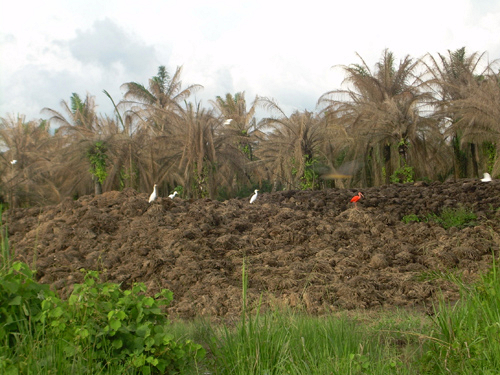
Oil palm wastes
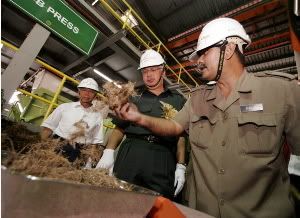
20/04/2011 (The Star) - Much of the 70 million tonnes of oil palm biomass produced annually is burnt or left to rot.

This waste pollutes rivers through seepage and harms the environment when it produces methane and carbon dioxide.

The Government has realised that oil palm biomass can be as valuable as crude palm oil and has come out with the Oil Palm Biomass Roadmap that will streamline efforts to convert this waste into wealth-generating industries.

Unik, an agency under the Prime Minister's Department to promote innovation, will undertake this project.

The agency will be collaborating with Dutch consortium BE-Basic to develop Malaysia's capabilities in using renewable resources for the production of chemicals, materials, products and fuels.

According to BE-Basic director Prof Dr Luuk van der Wielen, oil palm biomass would be able to contribute to the economy by as much as 5% if its use is widened to produce liquid biofuels and biochemicals.

“There's no technical barrier any more, it's a matter of making Malaysia attractive for companies to invest in this sector here, a matter of making connections to the plantation sector here,” he said in a recent report.

This development has also attracted foreign chemical companies which have invested by establishing demo-facilities in Malaysia.

Oil palm biomass can be converted into high-value chemicals such as ethanol and even higher value acids such as lactic acid, which is used in a wide range of food applications as well as the cosmetics industry and numerous biochemical processes.

It is also used as a monomer for producing polylactic acid, which has applications in biodegradable plastic.

Dr van der Wielen, who is also a professor at the department of biotechnology at Delft University of Technology, has been working with Universiti Teknologi Malaysia since 2009 to develop sustainable solutions for the chemical and fuel industry.

The Netherlands is the biggest consumer of palm oil in Europe.

The country is also currently the ninth largest export destination for Malaysia and third in the European Union.


Sustainable Solutions 

Sustainable Planet: Solutions for the Twenty-first CenturySustainable Transportation: Problems and SolutionsGreen Tech: How to Plan and Implement Sustainable IT SolutionsThe Curse of American Agricultural Abundance: A Sustainable Solution (Our Sustainable Future)Sustainable World SourceBook: Critical Issues, Viable Solutions, Resources for ActionSustainable Solutions for Water Resources: Policies, Planning, Design, and ImplementationGlobal Environmental Challenges of the Twenty-First Century: Resources, Consumption, and Sustainable Solutions (The World Beat Series)Transport and Environment: In Search of Sustainable Solutions (Transport Economics, Management and Policy Series)

Label

2011 News AGRIBISNIS APINDO Africa Agriculture Business Agriculture Land Argentina Australia Bangladesh Berita Berita Detikcom Berita Info Jambi Berita Kompas Berita Padang Ekspres Berita Riau Pos Berita Riau Today Berita Tempo Berita riau terkini Biodiesel Bursa Malaysia CPO Tender Summary Cattle and Livestock China Cocoa Company Profile Corn Cotton Crude Palm Oil (CPO) and Palm Kernel Oil (PKO) Dairy Dairy Products Edible Oil Euorope European Union (EU) FDA and USDA Fertilizer Flood Food Inflation Food Security Fruit Futures Futures Cocoa and Coffee Futures Edible Oil Futures Soybeans Futures Wheat Grain HUKUM India Indonesia Info Sawit Investasi Invitation Jarak pagar Kakao Kapas Karet Kebun Sawit BUMN Kebun Sawit Swasta Kelapa sawit Kopi Law Lowongan Kerja MPOB Malaysia Meat News Nilam Oil Palm Oil Palm - Elaeis guineensis PENGUPAHAN PERDA Pakistan Palm Oil News Panduan Pabrik Kelapa Sawit Penawaran menarik Pesticide and Herbicide Poultry REGULASI RSPO Rice SAWIT Serba-serbi South America Tebu Technical Comment (CBOT Soyoil) Technical Comment (DJI) Technical Comment (FCPO) Technical Comment (FKLI) Technical Comment (KLSE) Technical Comment (NYMEX Crude) Technical Comment (SSE) Technical Comment (USD/MYR) Teknik Kimia Thailand Trader's Event Trader's highlight USA Ukraine Usaha benih Vietnam Wheat benih bermutu benih kakao benih kelapa benih palsu benih sawit benih sawit unggul bibit sawit unggul biofuel biogas budidaya sawit corporation palm oil pembelian benih sawit perburuhan pertanian soybean umum varietas unggul